
Roadside assistance is one of the most widely held and least understood benefits in the automotive economy. Agero's 2026 Consumer Pulse shows an industry sitting on a proven loyalty lever — and quietly letting it go unused.
Every year, Agero fields a consumer study on roadside assistance to track how drivers experience a breakdown, what they expect from the brands that cover them, and how those expectations are shifting. The 2026 Consumer Pulse, fielded in May 2026 among more than 1,000 drivers, points to a conclusion that should matter to everyone who touches the roadside ecosystem: roadside is not a low-stakes perk buried in a policy or a warranty. It is the most tangible promise the industry makes: to show up when a driver is stranded. And across the board, that promise is being kept far more quietly than the data says it should be.
1 in 2 drivers have a roadside event every year
Nearly half of all drivers — 47% — experienced a roadside event in the past twelve months. That means roughly one in two customers, across virtually every book of business in the industry, will face a moment this year where the brand that covers them could be the solution to a genuinely stressful problem.
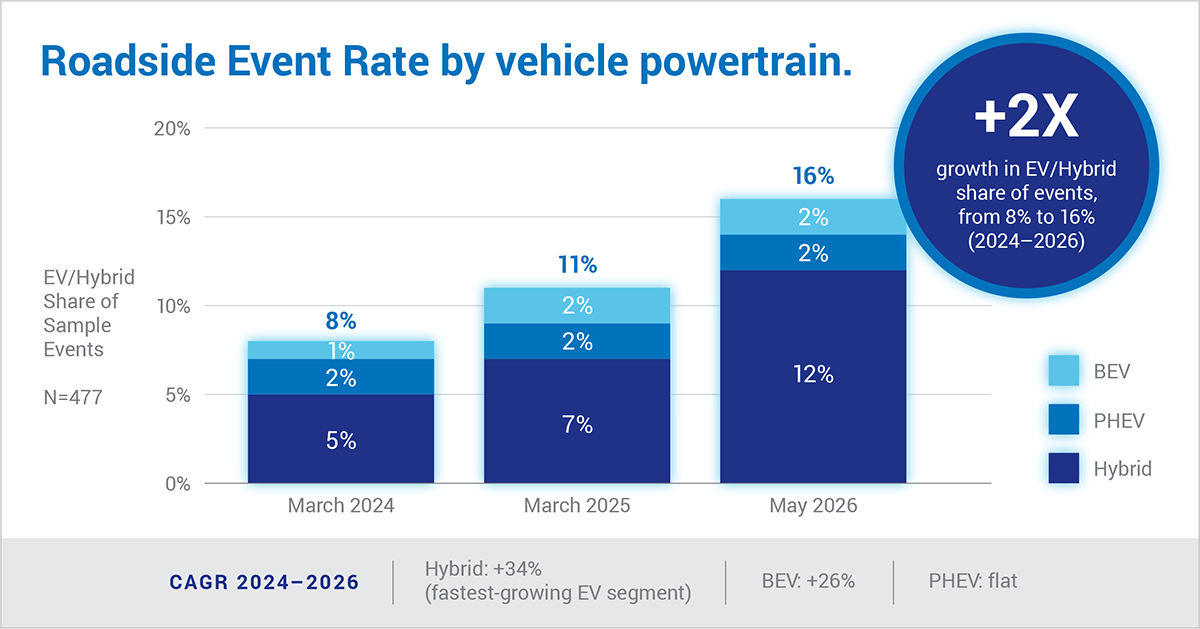
The frequency is climbing fastest in the segment every provider is racing to serve. Electric vehicle (EV) and hybrid drivers had roadside events at a higher rate (56%) than gas-vehicle drivers (46%), and are the fastest-growing slice of all events. Their share doubled in just two years, with hybrid events growing at a 34% compound annual rate and battery-electric events at 26%. As EVs and hybrids move into the mainstream, roadside demand from this group will only intensify, and the operational playbook for serving it is still being written.
roadside The quietest loyalty lever in the industry
Here is the finding that should reframe how the industry values roadside: a resolved roadside event is a powerful loyalty lever in the business, and most providers are sitting on it without activating it.
Roadside is, at its core, a moment of truth. It is the rare instance in a customer relationship — whether with an insurer or automaker — where the promise to be there is tested in real time, in the real world, and with high frequency. In categories where most interactions are a bill, a rate change, or a service reminder, a roadside rescue is a chance to deliver on that promise in a way the customer remembers.
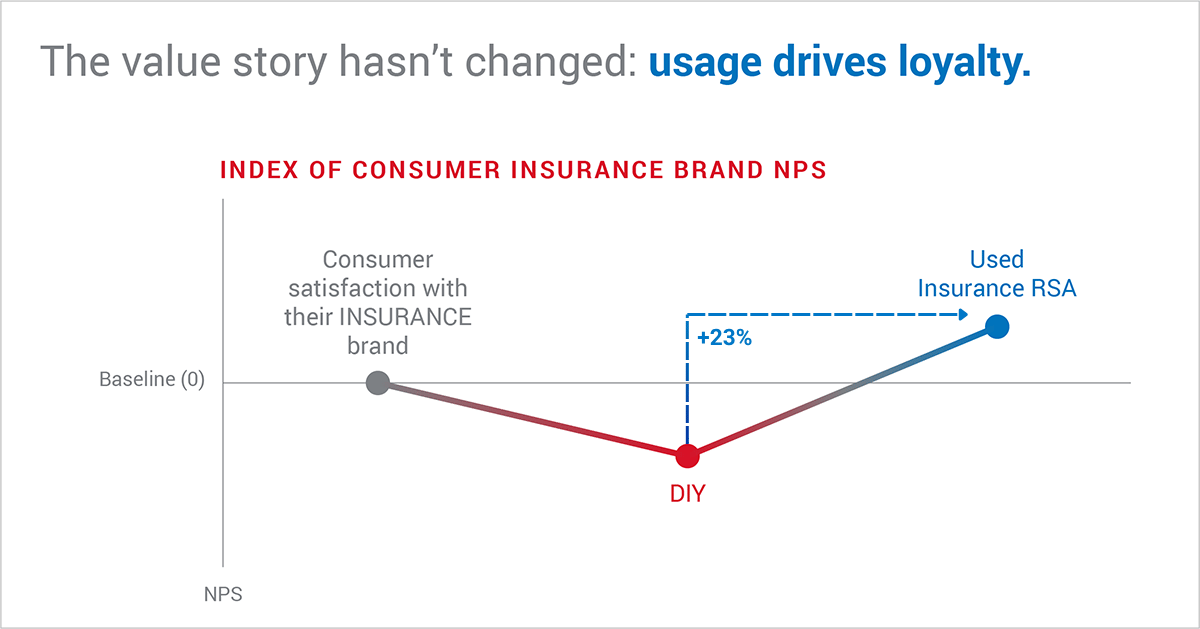
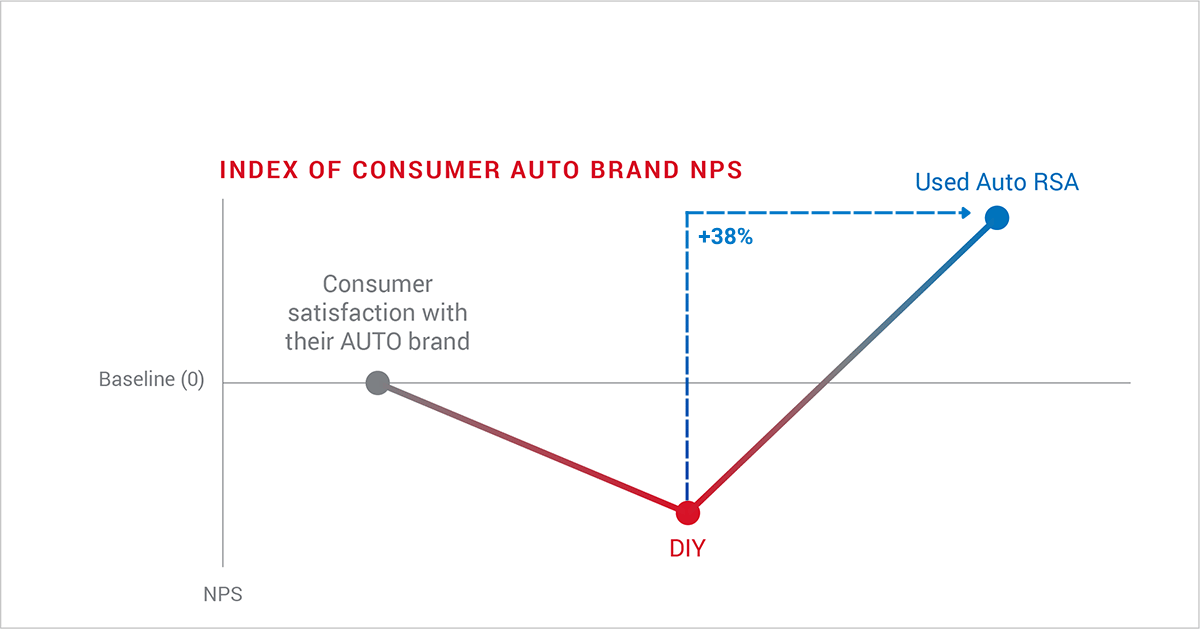
The data speaks for itself. When customers used insurance-provided roadside rather than solving the problem themselves, their Net Promoter Score for the insurance brand rose 23% above the pre-event baseline, and they reported being twice as likely to renew. The auto side is even stronger: a 38% NPS lift and a 19% higher repurchase rate when customers used manufacturer roadside. Two different industries, the same behavioral truth — a driver helped in a moment of vulnerability rewards the brand that helped them.
The strategic implication is hard to ignore. Brands across the sector spend heavily to acquire and retain customers through pricing, advertising, and digital experience. Meanwhile, roadside delivers a measurable satisfaction and retention lift for a benefit that is, in most cases, already embedded in the policy or the vehicle. It is loyalty capacity the industry has already paid for and is largely leaving on the table.
Drivers are going it alone — and it's not working
If roadside is such a strong lever, the trend lines should be encouraging. However, usage of provider-backed roadside is declining. Insurance roadside usage fell 24% year over year, and its share of how customers resolved their most recent event dropped from 21% to 16%. On the auto side, the amount of vehicle owners who turn their warranty coverage continues to remain minimal at 7%. Meanwhile, do-it-yourself (DIY) resolution is climbing: DIY grew 14% year over year and now accounts for 48% of all event resolutions, up from 42%. When something goes wrong, drivers are increasingly trying to handle it alone rather than reaching for coverage they already have.
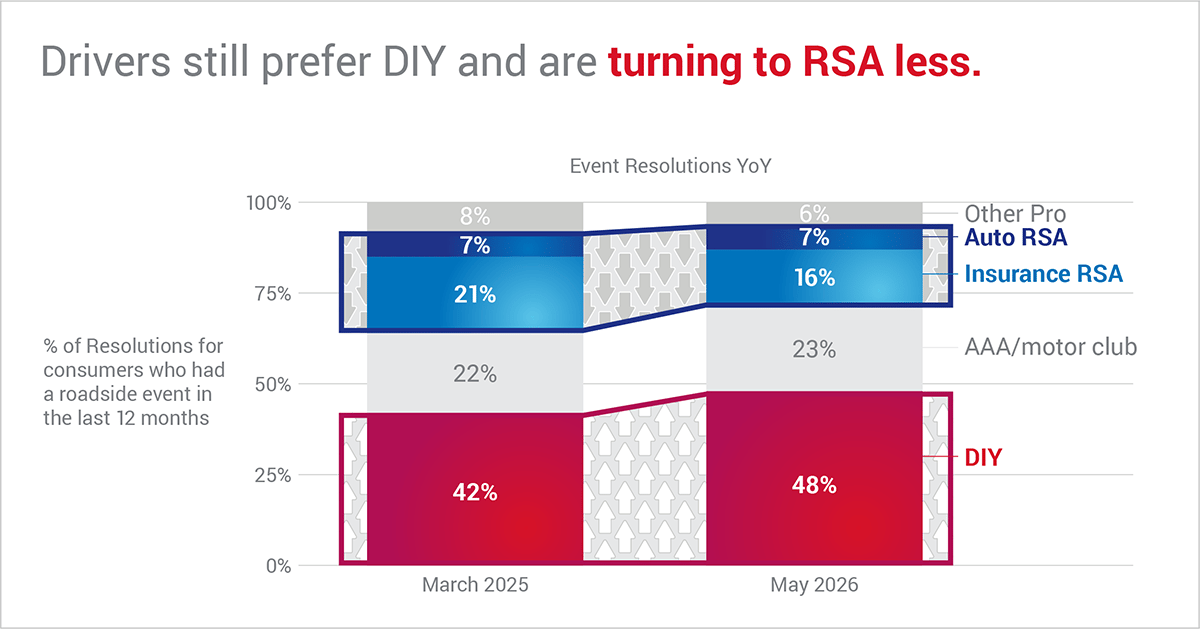
That would matter less if DIY worked. It often doesn't — 24% of DIY attempts are unsuccessful.
For those who did seek professional help, approximately one in four report being towed. Interestingly, data shows that 85% of these towing situations began with problems that could have been fixed on the spot, with true mechanical breakdowns accounting for just 15%.
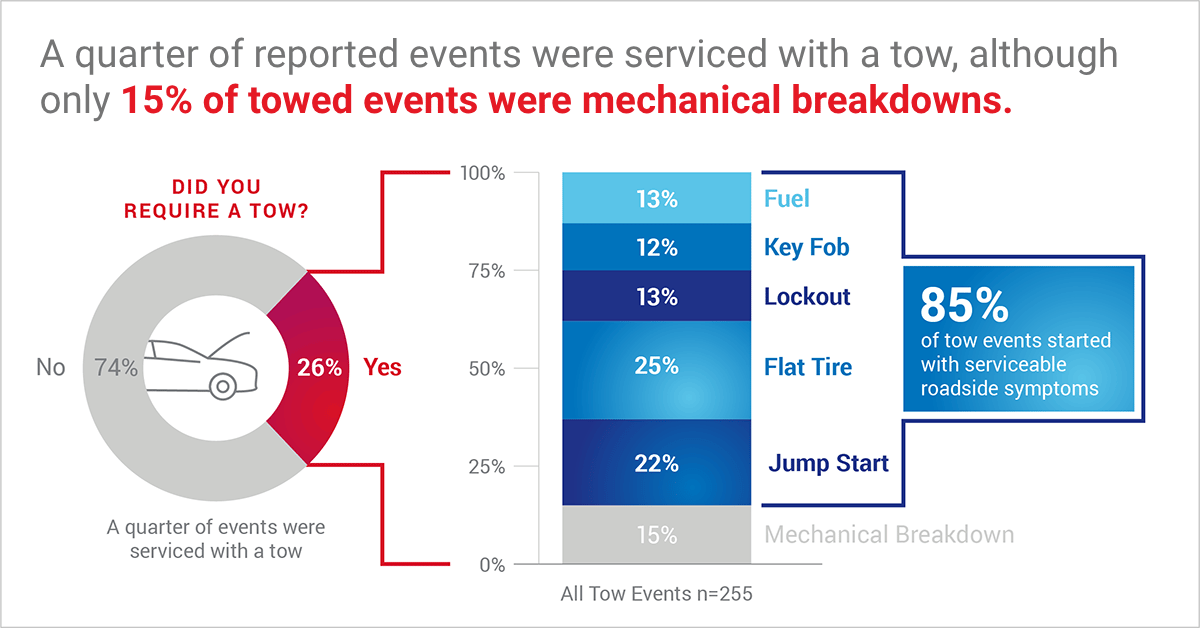
Every one of those is a moment of truth the provider never gets to answer, and the driver's lasting memory of the breakdown is that they were on their own. The loyalty lift evaporates before anyone in the industry even knows the event happened.
Two barriers, and neither is the product
The research is unambiguous about why customers opt out, and the reasons have nothing to do with service quality. Two barriers dominate across the sector, and both are addressable.
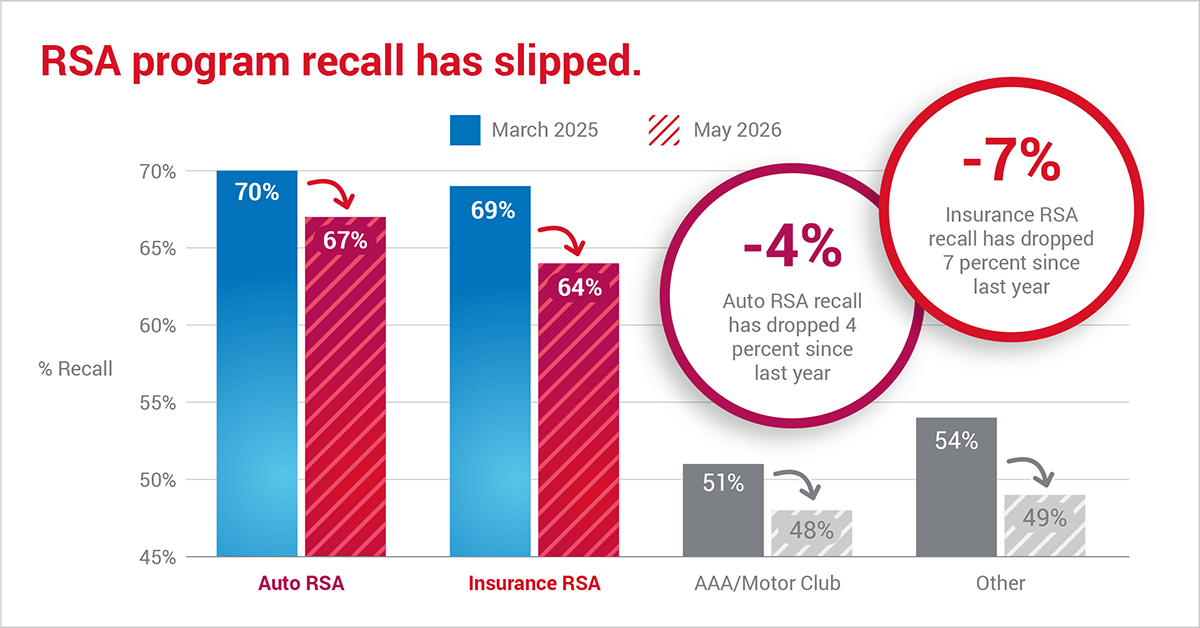
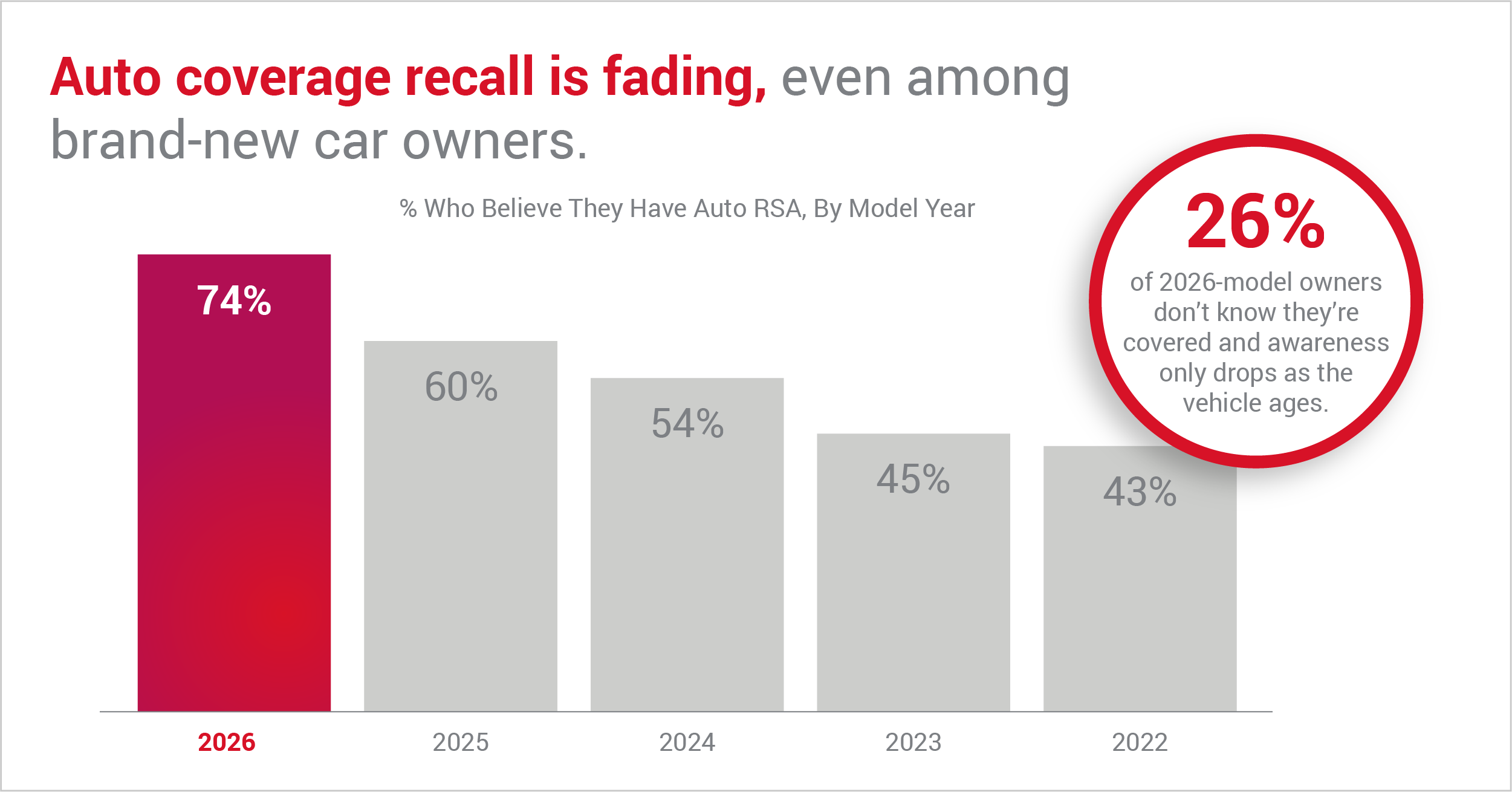
The first is awareness. Coverage recall is eroding regardless of program type. Recall of insurance roadside coverage slipped from 69% to 64% in a single year, and the erosion isn't limited to insurance policies. 26% of drivers with brand-new 2026-model vehicles don't realize they have warranty roadside coverage, and awareness only falls as vehicles age.
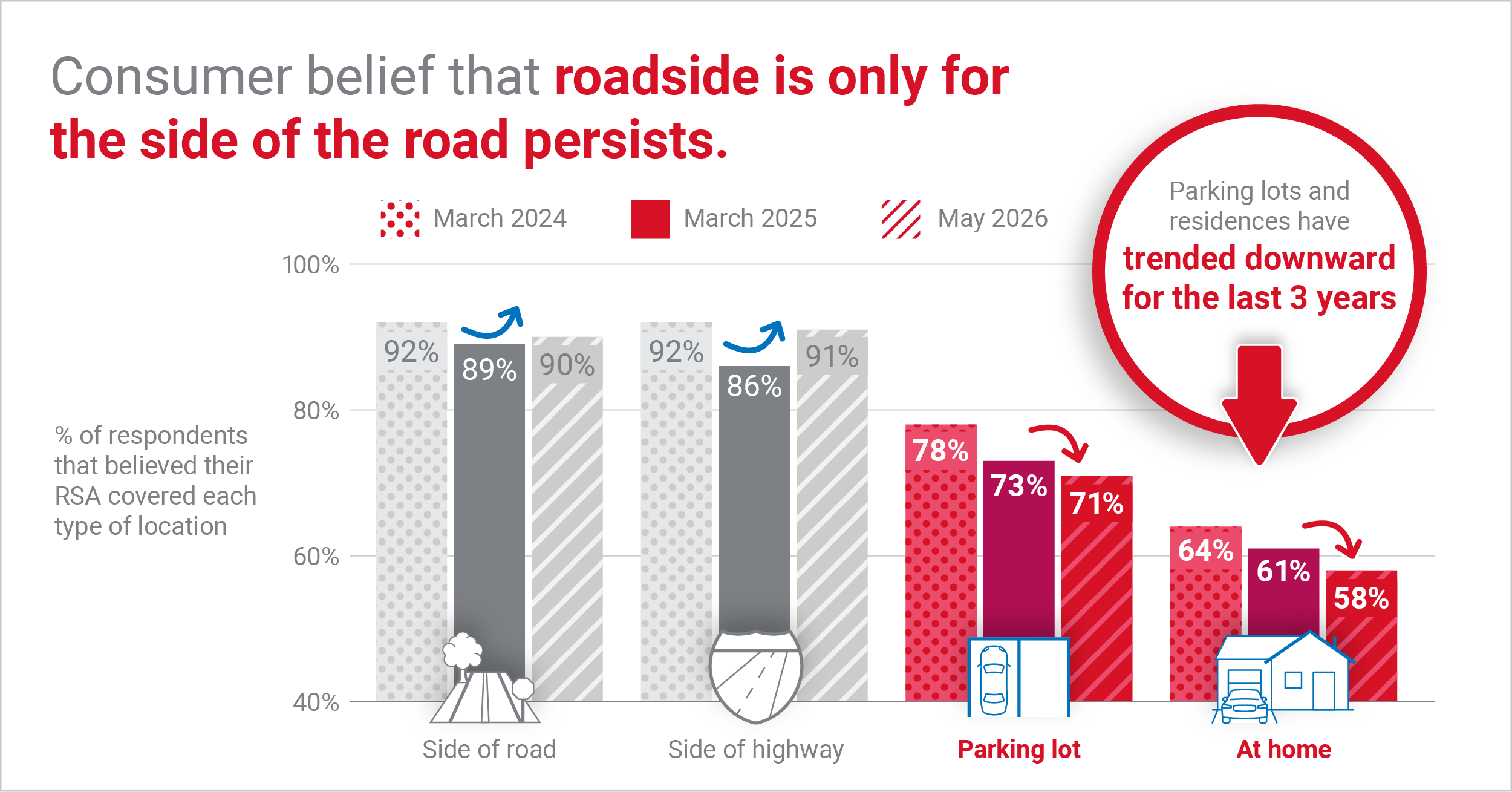
Customers also misunderstand where and for what they're covered: belief that coverage extends to a parking lot fell to 71% and belief it applies at home fell to 58% — each down nine points since 2024. Confidence in less-common but higher-value services like winching (56%), lockouts (50%), fuel delivery (51%), and EV battery charging (41%) is low and, for several, declining. Across the industry, drivers increasingly believe roadside stops at the edge of the pavement and covers only the most obvious problems.
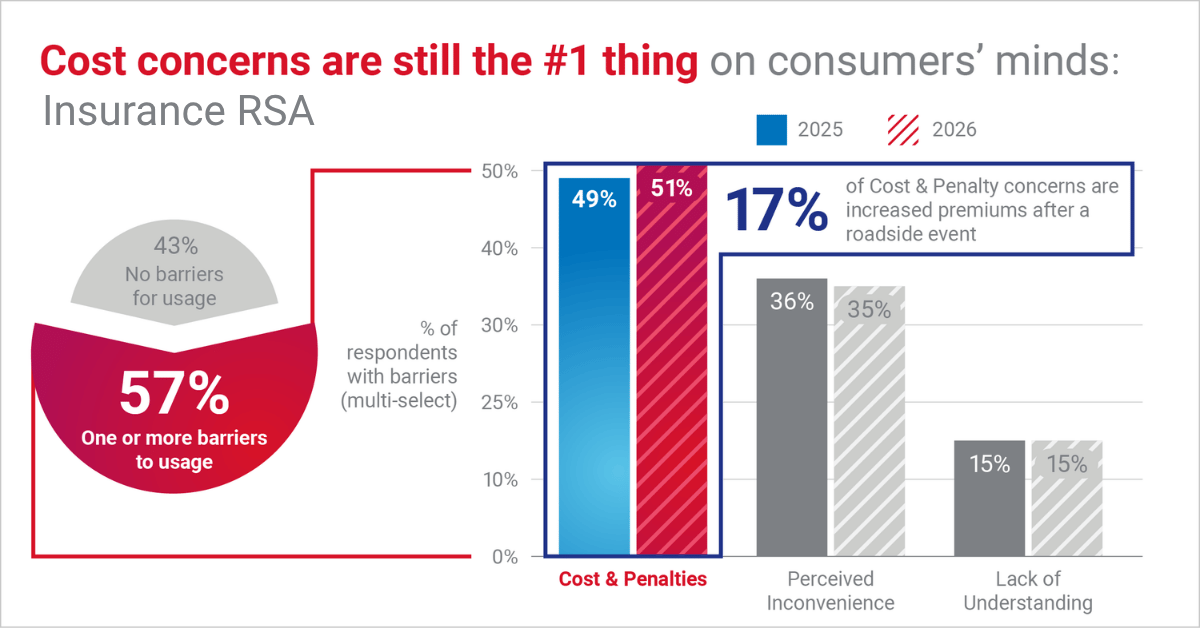
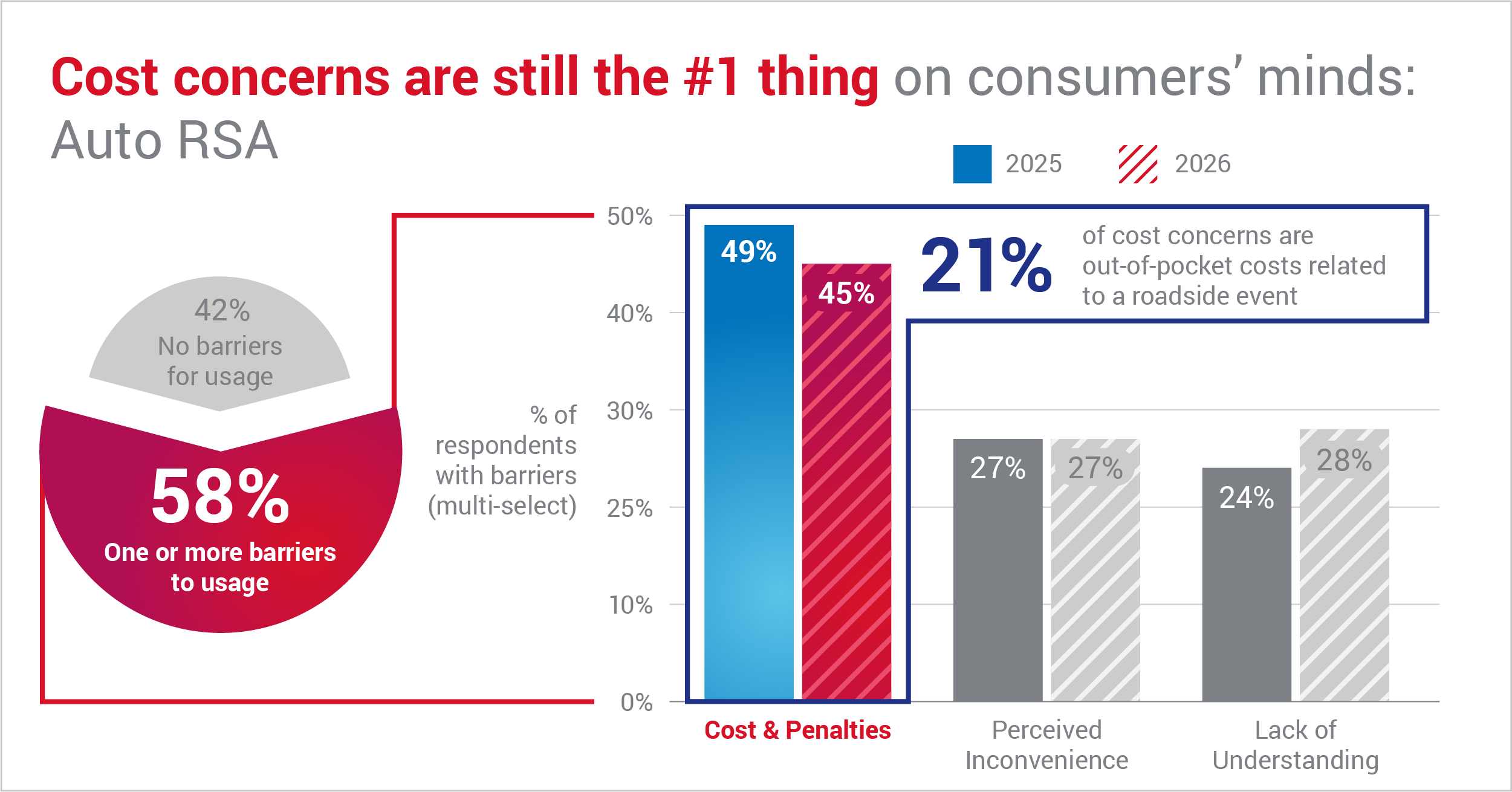
The second barrier is cost fear, the single most-cited reason customers hesitate. A majority of insurance customers — 57% — cite at least one barrier to using their benefit, with cost and penalty concerns topping the list at 51%. The pattern is nearly identical on the auto side at 58%. These fears are largely unfounded — 17% of cost-and-penalty concerns are specifically a fear that using roadside will raise a premium, which for most programs simply isn't how the benefit works. But perception governs behavior. Drivers are talking themselves out of a benefit that is effectively free to them because no one has told them otherwise.
The industry's opportunity — and Agero's invitation
The through-line of the 2026 findings is clear: a roadside benefit is useless if the customer doesn't know they have it, doesn't understand what it covers, or is afraid to use it. Passive availability doesn't build loyalty—activation does. The industry’s greatest opportunity is transforming a forgotten line item into a go-to solution.
Closing this "activation gap" is a shared challenge, and it is exactly what Agero is built to help the industry solve. Rather than letting coverage sit quietly inside a policy or warranty, Agero partners with clients to actively close the awareness gap in three distinct ways.
1. Reclaiming the Breakdown Event: We help clients proactively demystify the DIY approach, highlighting its genuine risks. By guiding drivers away from solo struggles and toward the safe, reliable service they already have, the next breakdown transforms into a trust-building, branded moment.
2. Reshaping the Lexicon: Language matters. We work with clients to position roadside assistance as a true benefit, not a claim. The word "claim" triggers fears of penalties and premium hikes, keeping customers from calling. By reframing the conversation, we make it explicit that this benefit covers everything from a driveway jump-start to a complex highway tow, inviting customers to actually use what they own.
3. Promoting Proactively: We help clients surface coverage early and often. By communicating boldly and consistently across all digital channels, we ensure the benefit is top-of-mind before an emergency strikes, rather than rediscovered after the fact. This includes reminding drivers how common roadside events are, spelling out exact coverage limits, and showing them exactly how to summon help through the digital tools they already use.
The Benefit is Yours. The Next Move is Too.
Ultimately, none of this requires a new product or a renegotiated network. It simply requires effectively marketing an existing benefit to customers who already have it. Every proactive touchpoint chips away at long-standing myths, replacing them with something far more valuable: a driver who knows exactly what they have, won't think twice about using it, and experiences the loyalty-defining moment that a rescue creates.
The coverage is already in place. The moment of truth is already coming for one in two drivers. The only question the industry has to answer is whether those drivers will think they have to face it alone — or remember that their coverage is there for them when they need it most.
Connect with us to learn more.
 As the Senior Manager of Marketing Strategy, Samira is responsible for helping our clients drive more value from their roadside assistance offering through marketing programs and customer engagement strategies. Samira has an MBA and Bachelors in Marketing from the University of North Florida and over 20 years of experience in B2B2C marketing strategy. She is based in Jacksonville, Florida with her husband John and twin daughters.
 Recent Posts
Agero, Through Its Urgently Acquisition, Partners with MOTER to Advance Connected Vehicle Claims and Digital Driver Assistance
Partnership combines digital roadside assistance, claims intelligence, and driver risk analytics to...Connection, Growth, and Belonging: Inside Agero’s Associate Resource Groups
At Agero, we believe that driving the future of vehicle assistance and driver safety requires a...Agero Announces New Insurance and Automotive Leadership Following Urgently Acquisition
Ben Zatlin and Harrison Russell named Chief Client Officers as Agero strengthens commercial focus...