
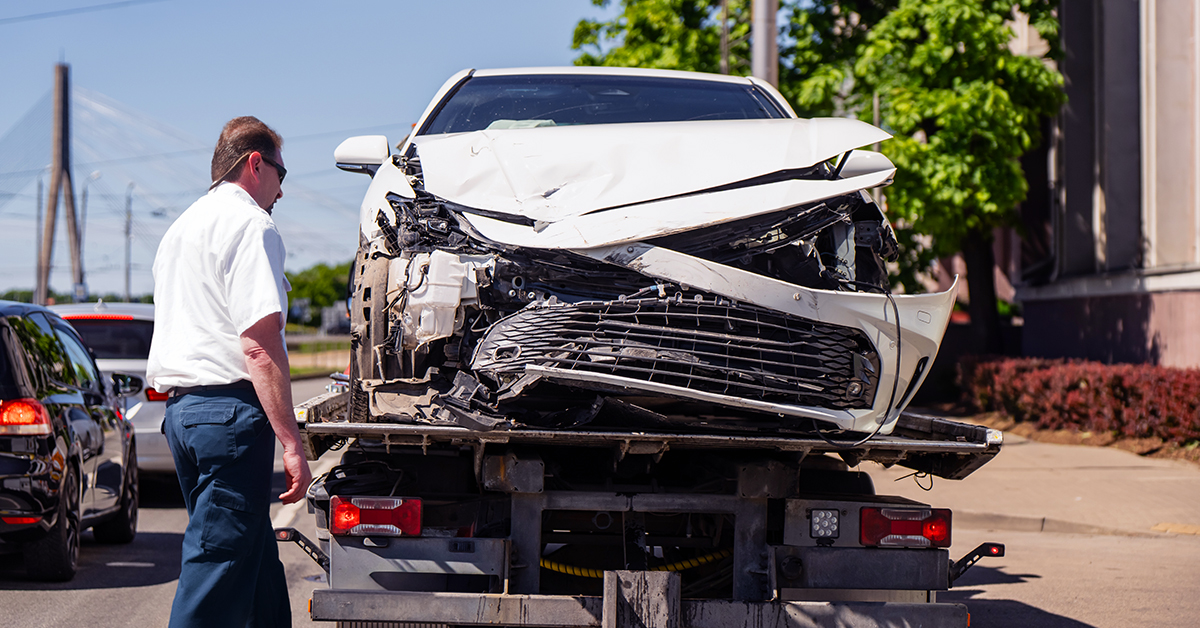
If you work in claims or collision repair, you know the moment I'm talking about.
A vehicle has just been involved in a serious accident. Law enforcement needs the roadway cleared. A tow is dispatched. The driver may not have even filed a First Notice of Loss (FNOL) yet, but a series of operational decisions is already underway—decisions that will determine cost, cycle time, storage fees, repair capacity, and ultimately the customer experience.
For decades, those first decisions have largely been made with incomplete information.
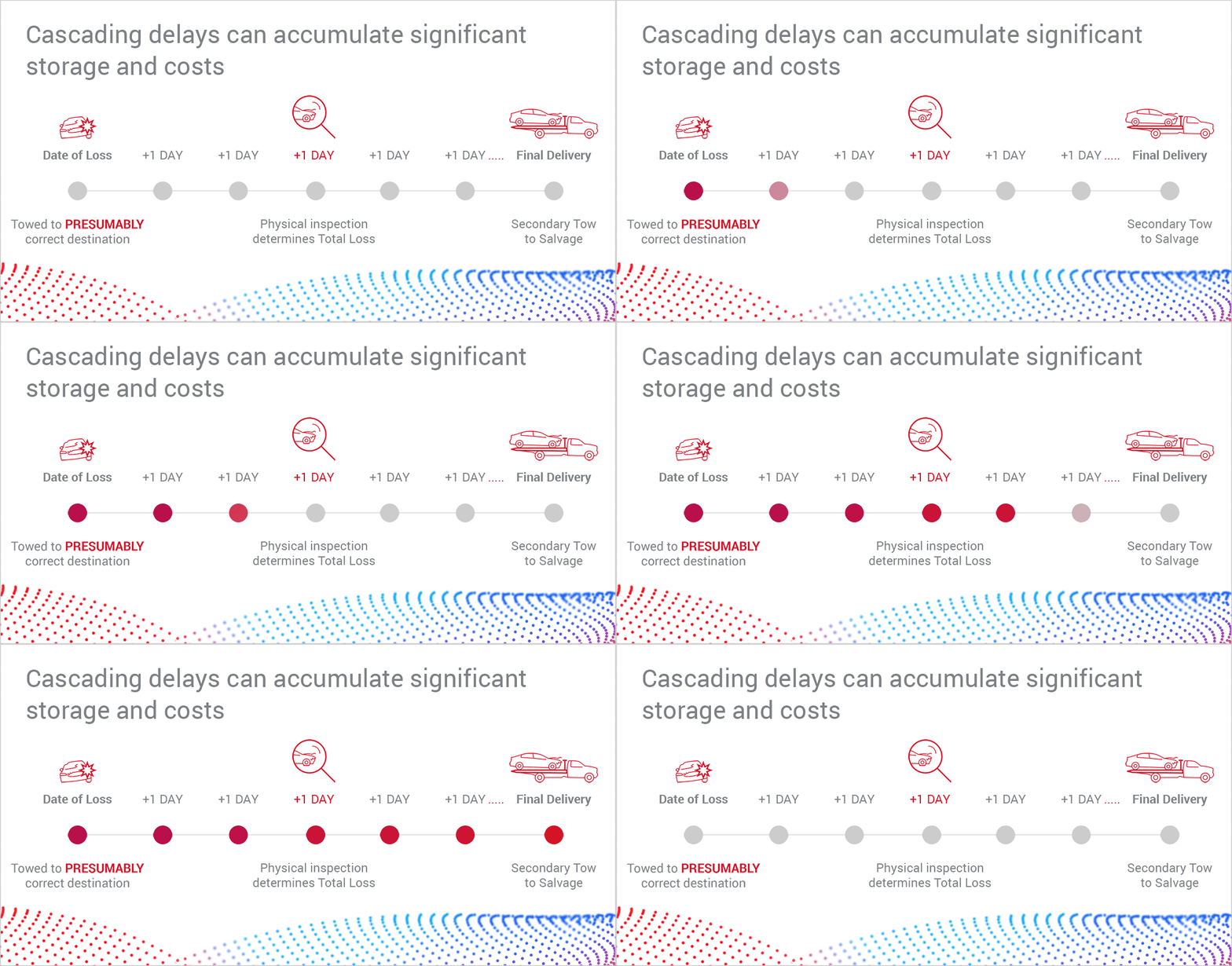
The safest option has often been to tow the vehicle to an impound lot, where it waits—accumulating steep daily fees—until someone can determine whether it’s repairable or a total loss. Days later, it’s released, towed again, inspected, and moved to its final destination. It's a process the industry has accepted for years, but it's also one filled with unnecessary friction.
What if we could make the right decision before the first tow was complete?
That’s the opportunity SmartTriage creates.
By combining real-time data collection at the scene with strategic ecosystem partnerships—such as our integration with CCC—we are transforming how the industry handles this process.
Our Service Providers already capture high-quality accident photos at the scene, using a guided capture experience with built-in quality control. This relieves drivers of the burden of documenting damage during a high-stress event, and ensures consistency and quality. With nearly 236 million photos collected to date, we’ve built one of the industry's richest datasets.
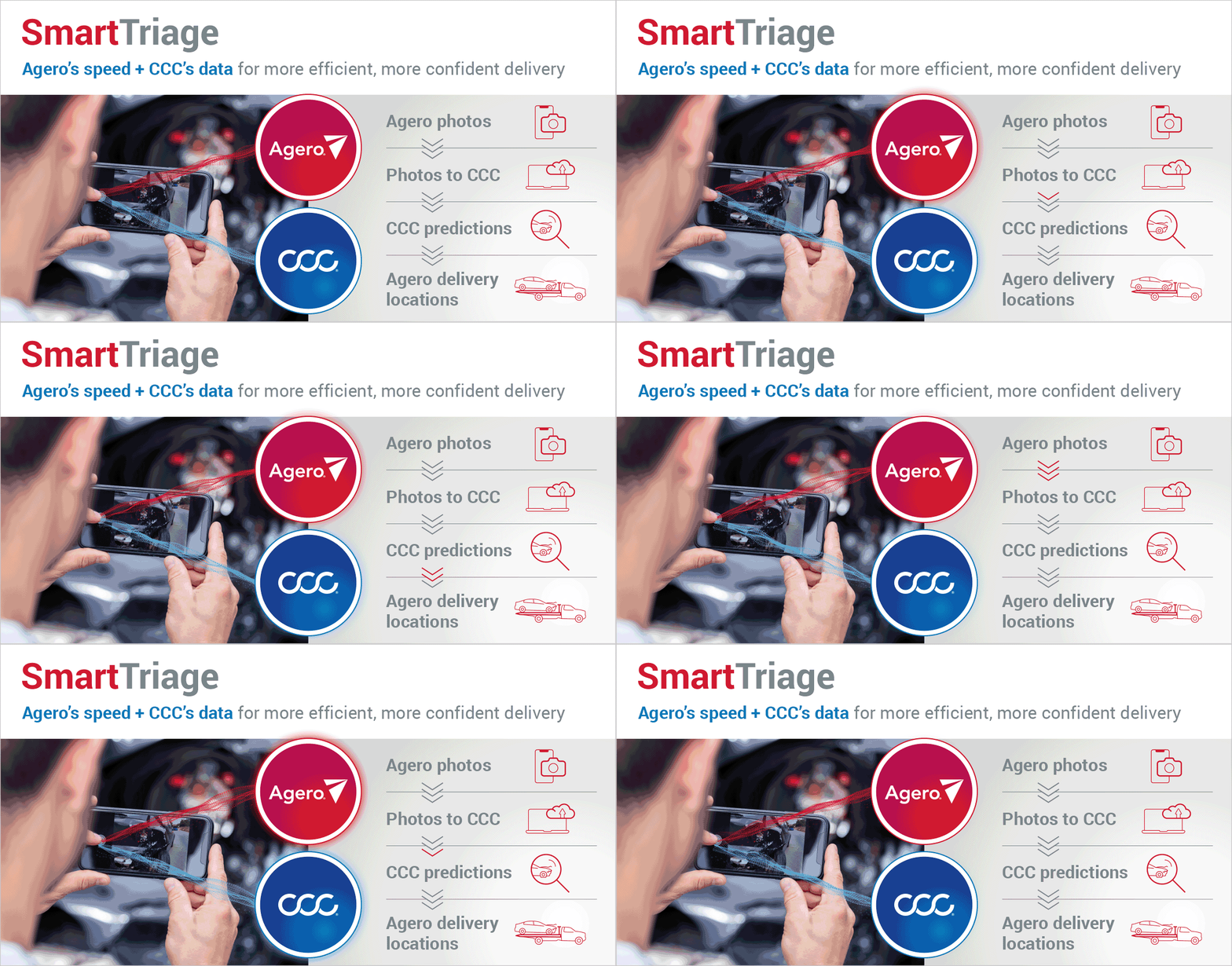
Using machine learning trained on millions of historical claims, those images are analyzed almost immediately to predict repairability and determine the optimal destination on the date of loss, while the initial recovery is still underway.
Turning Intelligence into Action
The implications extend far beyond a single tow. When the first destination is the right destination, secondary tows are reduced. Storage days are eliminated. Collision centers avoid having bays occupied by vehicles that will never be repaired. Claims move faster. Capacity improves across the network. And drivers experience a smoother recovery because the industry is operating with greater certainty from the very beginning.
The early results are encouraging. We’re returning repairability predictions in roughly 80% of cases, and through our estimatics partners, total losses are identified with over 90% accuracy. That translates into eliminating six to seven days of impound storage in many cases while removing unnecessary handling throughout the claims journey.
Moving the Industry Forward
To me, this is what meaningful AI looks like. Not replacing people, and not creating another disconnected point solution, but helping the entire ecosystem make better decisions earlier.
For years, roadside assistance has focused on getting the right truck to the right place at the right time. SmartTriage extends that philosophy one step further—ensuring the vehicle reaches the right destination the first time.
When we can replace uncertainty with actionable intelligence in those critical first hours after an accident, everyone benefits: insurers, repairers, Service Providers, and the drivers we collectively serve.
Ready to Streamline Your Claims Process?
Discover how Agero’s intelligent triage capabilities can help your organization reduce cycle times, eliminate storage fees, and improve policyholder satisfaction.
 As Chief Marketing Officer, Beth brings over 20 years of consumer and customer marketing strategy experience. In her role, Beth oversees all of our go-to-market B2B2C activities, developing products and promoting them to clients to better serve end consumers across all lines of business. Prior to joining Agero, Beth worked on the biggest consumer and customer strategy challenges of Fortune 100 companies from Coca-Cola to Merck to Microsoft. She was equally based in Boston, London and Johannesburg giving her perspectives on different go-to-market strategies and B2B2C scenarios from around the globe. When not working, Beth can be found on a golf course where she serves on the board of the LPGA Amateurs and desperately tries to keep her handicap in the teens.
Recent Posts
Agero, Through Its Urgently Acquisition, Partners with MOTER to Advance Connected Vehicle Claims and Digital Driver Assistance
Partnership combines digital roadside assistance, claims intelligence, and driver risk analytics to...Agero 2026 Roadside Report Shows Why Usage is Falling While the Payoff Keeps Rising
Roadside assistance is one of the most widely held and least understood benefits in the automotive...Connection, Growth, and Belonging: Inside Agero’s Associate Resource Groups
At Agero, we believe that driving the future of vehicle assistance and driver safety requires a...